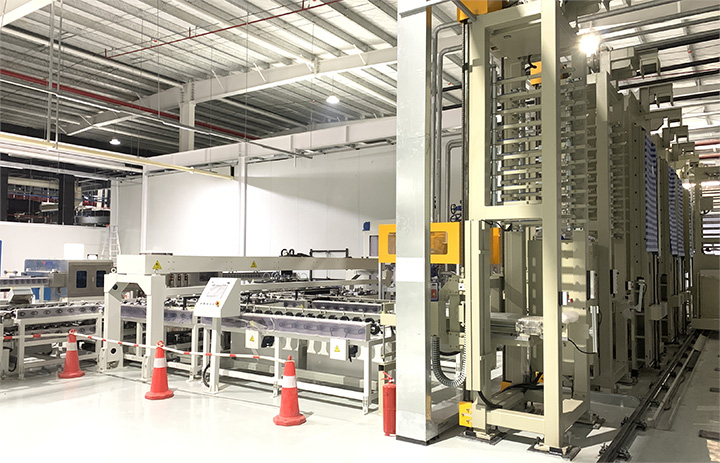
In the PCB manufacturing process, multi-layer PCB press is one of the important production tools. The multi-layer PCB press is mainly used to press the multi-layer PCB together, allowing different levels of PCB to be tightly combined, thereby achieving circuit connection. The uniformity of temperature and pressure is a very important parameter in the use of multi-layer PCB presses. To ensure that the temperature of each area of the PCB can meet the required pressing temperature requirements, and to ensure that the PCB can achieve the best pressing effect during the pressing process. If the pressing temperature of the PCB is uneven, it will lead to a decrease in the quality of the pcb, and even serious problems such as the board short circuits will occur, which will have a negative impact on work efficiency and product quality. The use of a laminating machine is essential in the processing of multi-layer PCBs, and the uniformity of pressure and temperature in the laminating machine has a significant impact on the quality of lamination. Regular stability tests need to be conducted through experiments. The conventional multi-layer PCB press testing mainly includes two aspects: temperature and pressure. In terms of temperature, we need to maintain a uniform heating of the heating board of the multi-layer PCB press to achieve the goal of uniform temperature. In terms of pressure, it is necessary to control the pressure balance of the multi-layer PCB press to ensure a stable internal pressure for the multi-layer PCB. 1. Pressure uniformity testing method For pressure uniformity testing, there is a specialized induction paper that acts as a copy paper. In addition, standard lead strips can be arranged for testing in the press, and the residual thickness of each segment of each lead strip can be measured after completion to determine the uniformity of the decompression machine, and the numerical value can be quantified. In addition, a more old-fashioned method is to use carbon paper on top of white paper for pressing operation, and then check the imprints left on the white paper after pressing to determine which position of the press platform is not pressed enough and which position is under even pressure. 2. Temperature uniformity testing method Using a thermocouple thermometer, create several more thermocouple wires, and then use nine or more points based on the position of the platform. After pressurization, record the temperature data at each position, and then compile the data into a chart format. This can easily and intuitively show the temperature uniformity of the entire compression platform. At the same time, multiple tests can be conducted to obtain changes in temperature reproducibility, thereby systematically evaluating the performance of the laminating machine. !cross-section of pcb Picture:cross-section of pcb When the uniformity test result of the pressing temperature of the PCB is qualified, it indicates that the pressing temperature of the PCB has met the requirements, and the temperature changes in each area are within the allowable range, which can ensure the pressing effect and quality of the pcb. On the contrary, if the test results are not qualified, it is necessary to retest and adjust until the qualified standard is reached.