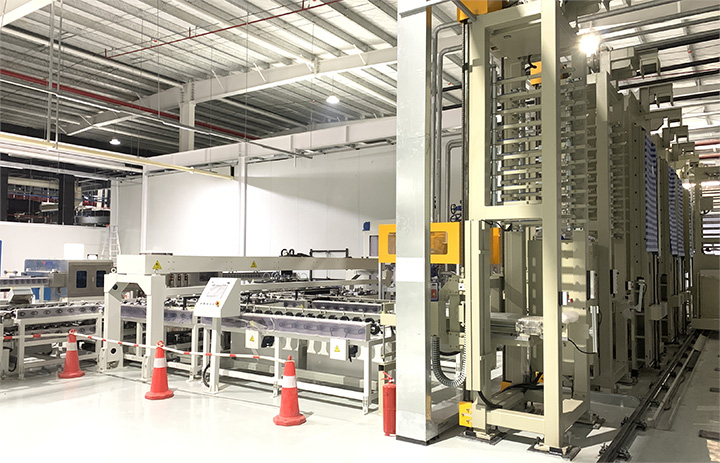
As the density of Integrated circuit packaging increases, the interconnection lines are highly concentrated, making multi-layer PCB widely used. Multilayer PCB are composed of inner layer PCB, semi cured sheets, and outer layer copper foil, which are pressed together through the high-temperature and high-pressure process of a press, and then connected to each layer of circuit through-holes to achieve their electrical performance. This requires high accuracy in the relative position between the overlapping points and holes of copper foil in each layer of the circuit, otherwise significant deviation will lead to product short circuits or open circuit scrapping. Therefore, achieving accurate alignment between layers is crucial for multi-layer PCB. General definition of PCB layer deviation: Layer deviation refers to the difference in concentricity between the layers of a PCB that originally required alignment. The scope of requirements is controlled according to the design requirements of different PCB types. The smaller the distance between its holes and copper, the stricter the control to ensure its ability to conduct and over-current. The commonly used methods for detecting layer deviation in the production process are: The commonly used method in the industry is to add a set of concentric circles at each corner of the production board, and set the spacing between the concentric circles according to the deviation requirements of the production board layer. During the production process, the deviation of the concentric circles is checked by an X-ray inspection machine or X-ray drilling target machine to confirm their layer deviation. Realizing accurate alignment between layers is one of the most critical environments for multi-layer PCB production. However, there are many factors that affect accurate alignment between layers, mainly including exposure alignment deviation of inner layer circuit core boards, PE punching accuracy, board shrinkage, pressing deviation, drilling accuracy, etc. The high-temperature and high-pressure fully enclosed conditions of the press are prone to layer deviation and scrapping, and the reason for the deviation is difficult to confirm due to the fact that the plate has already been pressed. The lamination process is a complex physical and chemical reaction process, and the matching of pressing plate parameters is crucial. It is necessary to organically match the lamination parameters "temperature, pressure, and time". For multi-stage pressure compression methods, firstly, in the early stage of heating up, the resin gradually begins to melt when heated, and the viscosity decreases before reaching the full flow stage. A lower pressure should be provided to ensure that the resin that begins to melt fully contacts the coarsened copper surface, which is usually referred to as contact pressure. Subsequently, the resin begins to flow and solidify, with a corresponding temperature range of approximately 80 ℃~130 ℃. The resin in this temperature range is fully flowing. In the next stage, sufficient pressure should be provided to help the resin flow quickly to fill the gaps between the wires and generate strong adhesion with each layer of copper. This is the problem of selecting and controlling the heating rate and high-pressure timing. Laminar stretching is the stretching change caused by the high-temperature and high-pressure pressing process of the inner core plates. Due to factors such as plate thickness, residual copper rate, copper thickness, pattern separation, PP type and quantity, the expansion and contraction changes of each layer of core board are inconsistent. During the riveting process of the bent plate, due to factors such as excessive pressure on the main shaft of the riveting machine, low height of the adjusting nails, or the presence of drilled and melted adhesive particles at the PP orifice, thin core plates (generally ≤ 0.13mm) are prone to damage during the riveting process. During the pressing process, the damaged core plate is not subject to the fixed tensile force of the rivets, and will experience significant deviation under the influence of factors such as PP glue flow, resulting in layer deviation defects. In order to solve the problem of layer deviation, manufacturers should take comprehensive detection, control, and corrective measures. During the production process, strict quality inspections should be carried out for each production link, such as the thickness, aperture, and drilling quality of the holes in the layer. At the same time, modern automatic control equipment and advanced correction technology can effectively reduce or eliminate layer deviation problems.