Flying probe testing — also called probe-bed testing — is a critical step in electronic manufacturing. Its purpose is to verify that the components, traces, and interconnects on a PCB are healthy, and to surface defects such as bad connections, shorts, and opens.
Principle
A probe-bed instrument moves a set of probes into contact with traces and impedance elements on the board to check electrical continuity between points. Testing typically includes DC resistance, AC resistance, capacitance, inductance, and other component-specific measurements.
Method
The board must be firmly fixtured. Operators choose appropriate tooling, methods, and sequence, then bring probes into contact with each defined test point in the specified order, recording measurements as they go. Pass/fail is judged against the test program.
Application
Flying probe testing is run at multiple stages — pre-production QC, in-process QC, and post-production QC. It is one of the most widely used electrical-test methods in the industry.
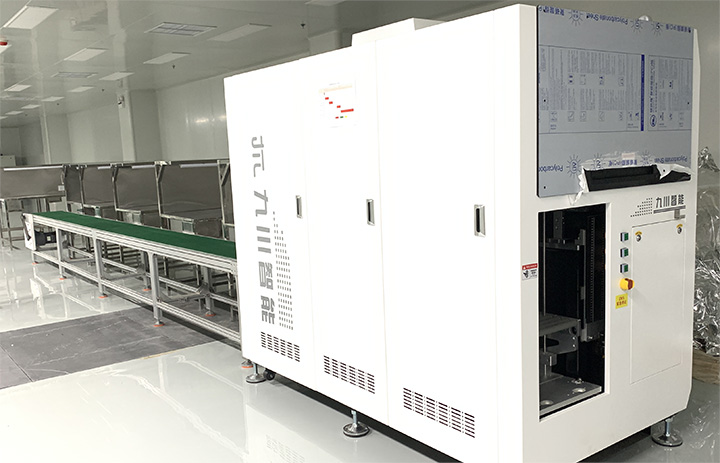
Image: electrical test
Sihui Fuji QC procedure
- Equipment accuracy check — operators verify probe-bed accuracy before each shift.
- Strict test standards — IPC standards drive the test specs for continuity, shorts, opens, etc.
- Test-result logging — every defect is recorded, classified, and analyzed.
- Process feedback — results feed back into process tuning so defect categories are addressed at the source.
E-test is a final pre-ship gate. Strict electrical-performance testing on the substrate ensures shipped product is good and customer-trouble-free.
Flying probe is essential to electronics manufacturing — it catches defects in time and prevents downstream losses. As manufacturing technology advances, the method continues to improve, supporting industry-wide innovation.