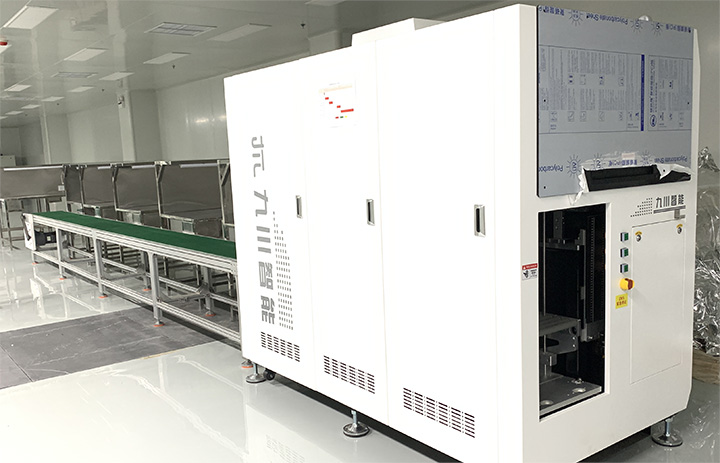
The constant temperature and humidity experiment of PCB is a commonly used experimental method for quality testing of electronic PCB. This experiment tests the working stability of electronic boards in different environments by simulating their usage environment under different humidity and temperature conditions. The principles of test This experiment uses a constant temperature and humidity chamber to maintain a fixed temperature and humidity. The electronic PCB to be tested is placed in the chamber and its quality is judged by testing its stability in different environments. The geometric conditions and volume fraction of fibers have limitations on them. In an unbalanced system, the moisture content in the resin is uneven, and the moisture content gradient makes the stress and strain of the material gradient distribution. Even if the moisture content is uniform, there is a difference in swelling between adjacent layers of the laminate, which will also lead to the generation of internal stress in the material. The moisture content increases the elasticity of epoxy resin and reduces its elastic modulus; The change in matrix modulus has almost no effect on the longitudinal tensile strength and modulus, while the change in matrix film amount has a significant impact on the longitudinal tensile strength, interlayer shear resistance, and interlayer shear resistance. The decrease in epoxy resin content caused by water can be reversed. After changes in the external environment and diffusion of water, the membrane capacity of the resin can almost return to its original level. However, for many water absorption processes, the property changes caused by water are irreversible. Irreversible changes will significantly reduce the physical and mechanical functions of the data. At the same time, the data anti-aging function can be detected by the constant temperature and humidity box simulating the humid atmospheric environment. !info-171-227 Picture:Constant Temperature ChamberThe method of experimental operation: 1. Place the PCB to be tested in a constant temperature and humidity chamber. 2. Adjust the temperature and humidity inside the constant temperature and humidity chamber to meet the environmental conditions required by the design of the PCB to be tested. 3. Conduct stability tests on the pcb to be tested in a constant temperature and humidity chamber, and record the test data. Precautions: 1. Before the experiment, check whether the temperature and Hygrometer in the constant temperature and humidity chamber are accurate to ensure the accuracy of the experimental data. 2.During the experiment, attention should be paid to preventing external temperature and humidity from affecting the experimental results. 3.During the testing process, attention should be paid to maintaining the stability of pcb to be tested to avoid any deviation in the test data. Quality judgment: By conducting stability tests on the pcb under test in different environments, it can be determined whether its quality meets the design requirements. If the various test indicators of the pcb to be tested in the constant temperature and humidity chamber meet the design standards, the PCB can be considered as qualified in quality. Otherwise, it is necessary to further inspect and improve the design and manufacturing process of the PCB. After the test is completed, the testing equipment should be maintained in a timely manner, test data and records should be saved, and the test results should be analyzed and summarized to determine whether they meet the product standard requirements.